PVC Christmas Tree Film: A Practical Buyer’s Guide for Manufacturers
Intro
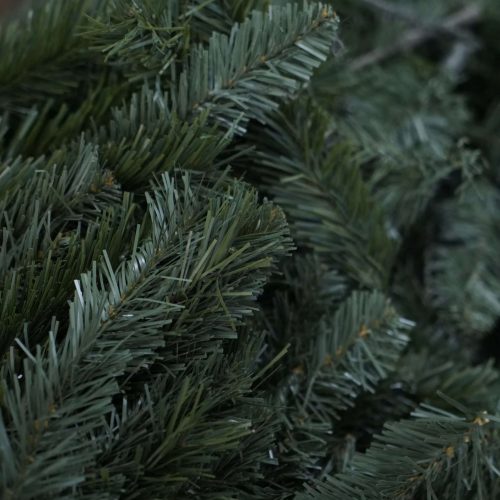
Choosing PVC Christmas tree film is not simply a raw material decision. It is a production decision that affects leaf drawing performance, branch appearance, batch consistency, and finished tree quality.
Buyers who evaluate film on price alone often discover the real cost later — when breakage rates climb on the leaf drawing machine, when finished branches show color variation between production runs, or when a tree that looked acceptable at the sample stage looks dull and grey at scale.
This guide covers what manufacturers and procurement teams need to know before sourcing: the specifications that matter, how to test a sample properly, what flame-retardant options are available, how customization works, and how to place a first order from an international supplier.
If you are new to PVC Christmas tree production, our guide to making an artificial Christmas tree explains how the film fits into the broader branch and tree assembly workflow.
What Is PVC Christmas Tree Film and How Is It Used?
PVC Christmas tree film is a rigid PVC material used to produce the leaves and branches of artificial Christmas trees. It is the primary raw material in PVC-based production lines, and its quality directly affects every downstream step in manufacturing.
In production, the film is slit from a master roll into narrower widths. Narrow strips are used as branch cores to give each branch structure and a more realistic appearance. Wider strips are fed through a leaf drawing machine, which pulls and forms the PVC into individual leaf shapes. Those leaves are then cut and bound onto wire cores to form finished branches, which are assembled into the complete tree.
Because the film passes through multiple machines and process steps, any inconsistency in thickness, surface quality, or material composition will show up quickly. A film that looks acceptable on inspection may cause breakage during leaf drawing, produce dull-colored leaves, or create visible color differences between production batches. Understanding this production context is what separates a well-sourced material from a problem that costs time and output on the factory floor.

Thickness and Width: Choosing the Right Specification
Specification selection is one of the most practical decisions a buyer makes when sourcing PVC Christmas tree film. Getting it right means better machine compatibility, more stable output, and a finished product that meets your quality standard.
Thickness and Its Effect on Production
The standard thickness range runs from 0.07 mm to 0.23 mm. In practice, the most commonly used production thicknesses are:
- 0.07 mm — a thinner film used where a lighter, more delicate leaf appearance is required
- 0.10 mm — a widely used thickness that balances leaf quality with production speed
- 0.12 mm — a slightly thicker option that produces a fuller, more substantial leaf, often preferred for mid-range and higher-tier tree products
Thickness affects more than leaf appearance. If the film is thicker than your leaf drawing machine is configured for, output will slow. If it is thinner than expected, the leaf may lack the body and resilience required for the finished branch. Always test a new specification on your actual machine before committing to a volume order.
Master rolls are produced at 700 mm wide and slit to the required width for your process.
Width Options and Their Applications
Width selection depends on the role the film plays in your production line:
- 12 mm, 15 mm, and 18 mm — used for branch cores; wrapping the core with narrow PVC film gives the branch more structure and a more realistic appearance
- 50 mm and 70 mm — used for leaf production; these wider strips are fed through the leaf drawing machine to form individual leaves
If you are running both branch core and leaf production, you will likely need more than one width. Confirm your machine parameters before placing an order. If you are unsure which width suits your setup, discuss your production configuration with your supplier before finalizing specifications.
Flame-Retardant Performance: What Buyers Need to Know
Flame retardancy is a compliance requirement in many export markets and one of the first questions procurement teams should ask when evaluating a supplier.
The highest flame-retardant grade available for PVC Christmas tree film is UL 94 V-0 — the most stringent rating under the UL 94 standard for plastic materials. Buyers exporting to markets with strict fire safety requirements should specify this grade.
A few practical points:
- Standard film is not flame-retardant by default. Flame-retardant additives must be specified when ordering. If your production requires FR-grade material, state this clearly when requesting samples and when placing your order.
- Flame-retardant and standard film look similar on inspection. The difference is in the formulation. This is why documentation and verified third-party test reports matter — do not rely on verbal confirmation alone.
- If your market requires standards beyond UL 94, confirm with your supplier which documentation is available and whether additional testing is needed before making compliance claims to your customers.
If your export market requires flame-retardant film, contact our team to ask about UL 94 V-0 options and available documentation.
Color Options and Custom Orders
Color is one of the most visible quality factors in a finished Christmas tree. Buyers who overlook color consistency during sourcing often encounter problems that are difficult and expensive to correct after production has started.
Standard Stock Colors
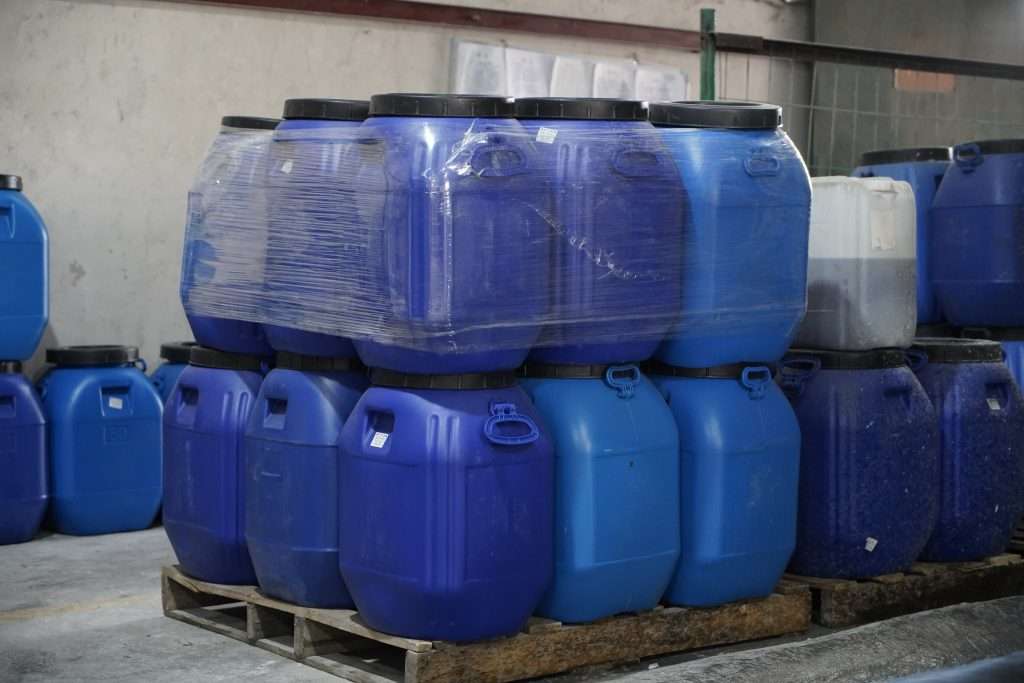
The most commonly used colors are available from stock. Standard options include 691, 677, and 3330 — the color codes used in the industry for the most typical Christmas tree greens. If your production uses one of these, lead times will generally be shorter than for custom orders.
Confirm current stock availability with the supplier before finalizing your order plan, as inventory levels vary by season and production cycle.
Custom Color Matching
If your tree design requires a color not available from stock, custom matching is available:
- Send a physical color reference — a branch, leaf, fabric swatch, or any physical object with your target color — and the film will be matched to it. A color card is also available for buyers without a specific reference.
- Minimum order quantity: 1,000 kg per color
- Lead time: approximately 15 days from color confirmation to delivery
Custom orders require more planning lead time than stock orders. If you are launching a new tree line or changing your color specification, build the color confirmation step into your sourcing timeline before your production window opens.
UV Resistance and Outdoor Use
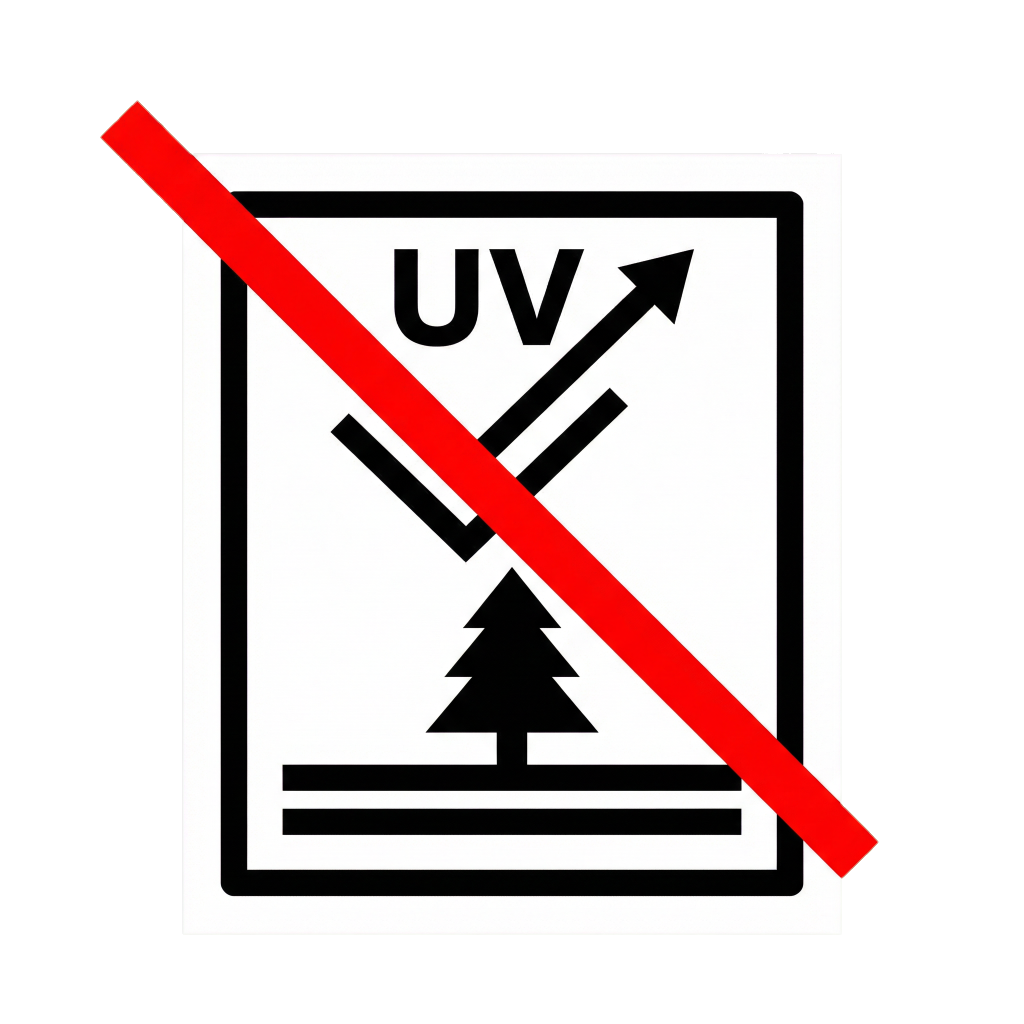
Standard PVC Christmas tree film does not contain UV stabilizers. It is not suitable for outdoor use or for applications where the finished tree will be exposed to prolonged sunlight.
If you are producing trees intended for outdoor display, communicate this requirement before ordering. A UV-resistant formulation is available on request at a slightly higher price, and lead time may differ depending on the specification.
This is a detail that is easy to overlook during sourcing and difficult to correct after production has started. If your product range includes outdoor trees, confirm the UV requirement with your supplier before sample testing begins.
How to Evaluate a Film Sample
Receiving a sample is the right first step. Evaluating it properly is the next. Here is a practical approach covering the key quality indicators.
Visual Inspection
Before any machine testing, examine the sample carefully:
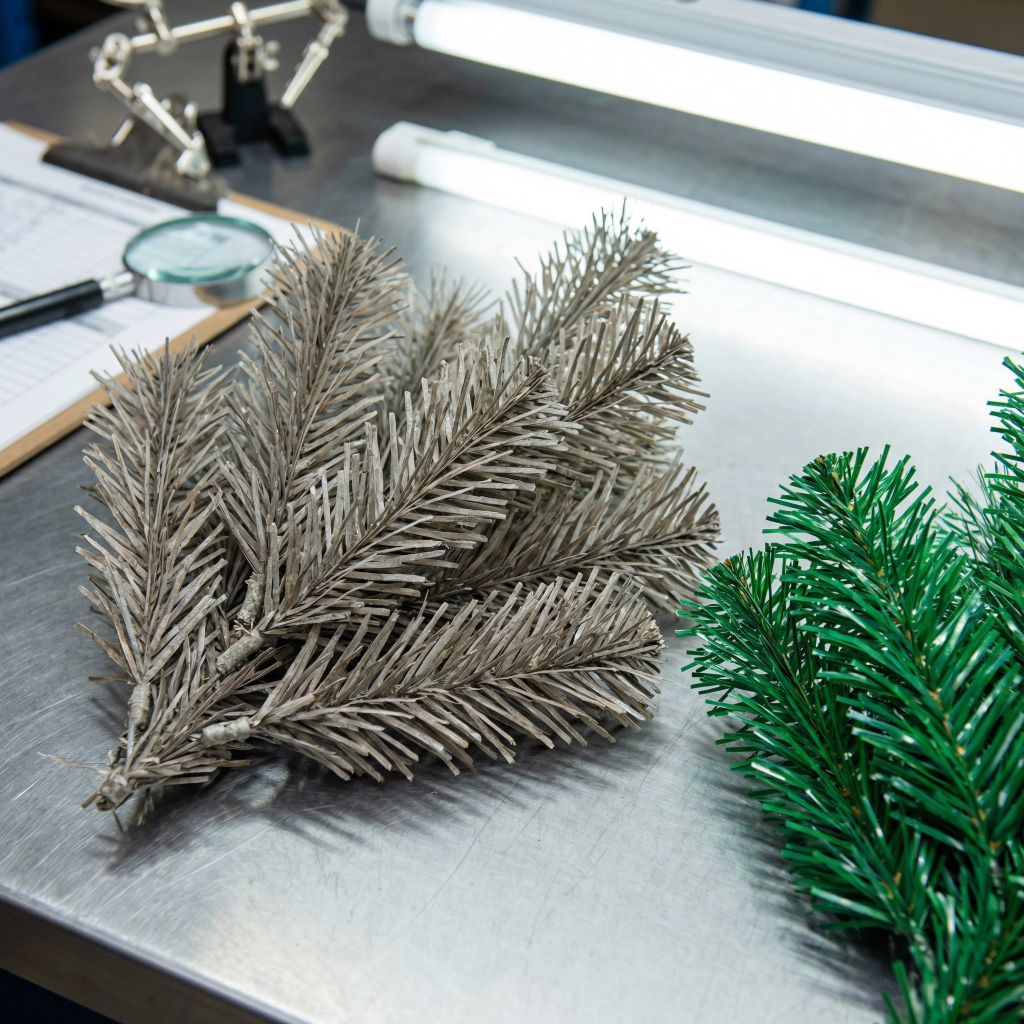
- Color vibrancy — the film should have a clear, vivid color. A dull, grey, or muted appearance often indicates recycled material in the formulation. Recycled-content film produces visually inferior finished trees, and the problem cannot be corrected after the fact.
- Surface cleanliness — check for unmelted resin particles, visible contamination, or holes in the film.
- Surface uniformity — the film should be smooth and consistent. Bubbles, lumps, or irregular texture indicate a formulation or processing problem.
Thickness Verification
Measure the sample against the stated specification using a micrometer or gauge, checking multiple points across the width.
Thickness inconsistency is one of the most common quality problems in lower-grade film and has direct production consequences. If the film is thicker than specified, output will drop. If it varies across the roll, your leaf drawing machine will behave inconsistently and breakage rates will increase.
On-Machine Testing
The most reliable quality test is running the sample through your actual production equipment:
- Feed the film through your leaf drawing machine and observe how it runs. It should flow smoothly without interruption.
- Check for breakage — film with insufficient tensile strength will break during leaf drawing. Even occasional breaks add up to significant production losses at volume.
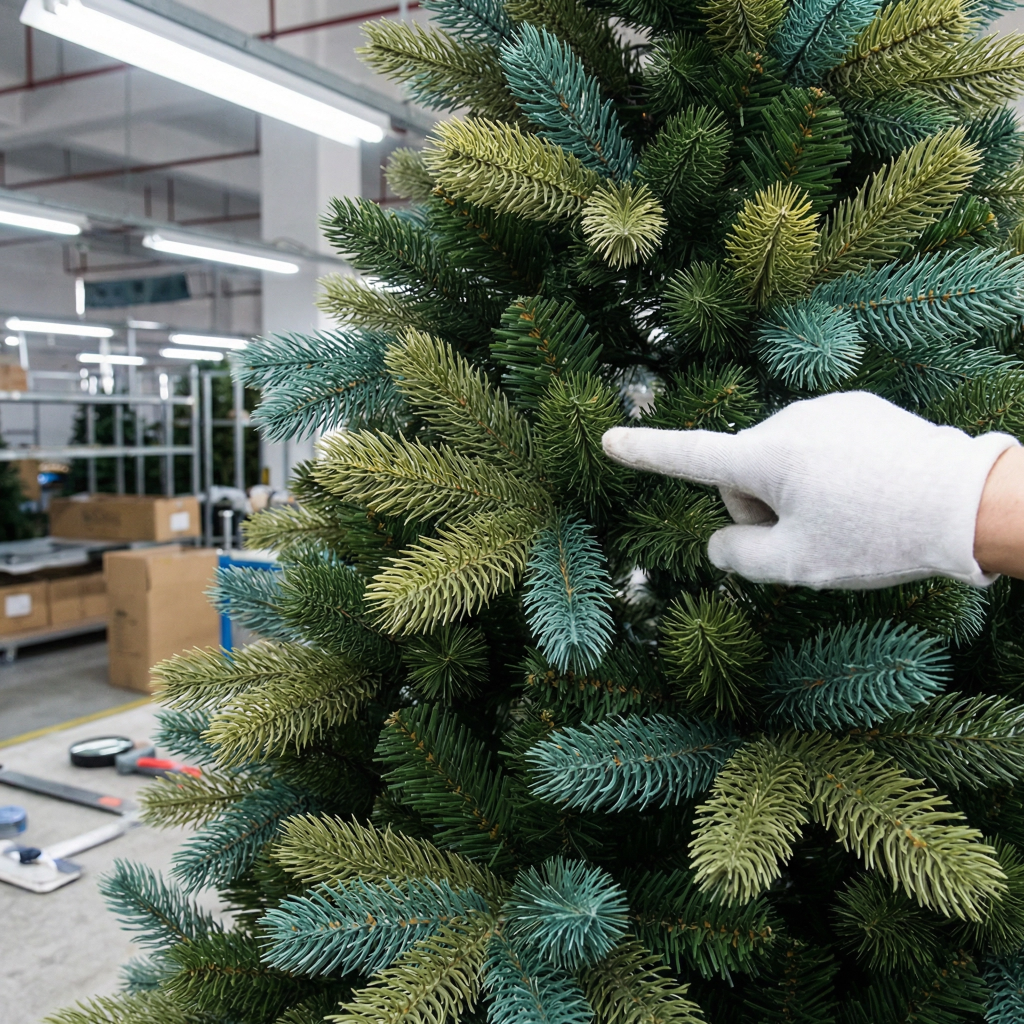
- Evaluate the finished leaf — check the color against your target and assess the resilience and spring-back. A branch that does not hold its shape after handling creates quality problems in the finished tree.
- Check batch consistency — if you receive samples from multiple production batches, compare them. Color variation between batches is one of the most common complaints in Christmas tree production and becomes visible in the finished tree when branches from different runs are assembled together.
Common Production Problems from Low-Quality Film
Understanding what goes wrong with substandard film helps buyers make better sourcing decisions. These are the most common problems that appear on the production line when film quality is insufficient.
Color dullness from recycled material. If a supplier uses recycled PVC to reduce cost, the finished film will have a grey, washed-out appearance that carries through to the finished leaf and tree. The problem is not visible on the price sheet — it becomes visible when you run the material.
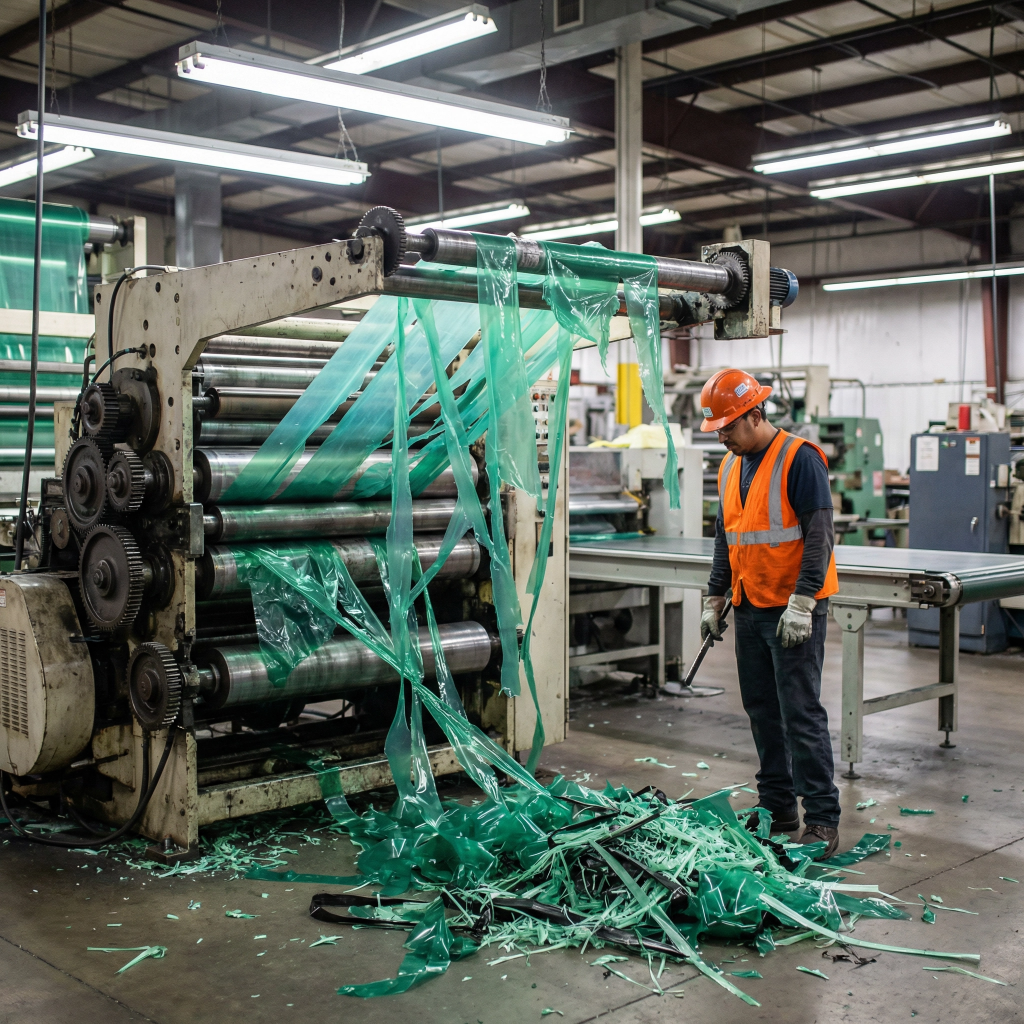
Breakage during leaf drawing. Film that lacks sufficient tensile strength will break on the leaf drawing machine. Each break interrupts production, requires re-threading, and generates waste. At volume, even a modest increase in breakage rate translates into a significant reduction in daily output and a higher material cost per finished branch.
Batch-to-batch color variation. Inconsistent pigment formulation or raw material sourcing leads to color differences between production batches. When branches from different batches are assembled into the same tree, the variation becomes visible — a quality defect that is difficult to explain to a retail buyer.
In each case, the downstream cost is real. A lower unit price on the film can easily be offset by higher breakage rates, lower output, more production downtime, and finished trees that do not meet your quality standard. Evaluating total production cost — not raw material price alone — leads to better sourcing decisions.
What to Look for in a Reliable Supplier
The PVC Christmas tree film market includes suppliers at a wide range of price points. The difference between a reliable supplier and a low-cost risk is not always visible in the sample stage. It becomes visible over multiple production runs.
Manufacturing experience in the Christmas tree industry. A supplier with over 20 years of experience manufacturing Christmas tree film has worked through the formulation and consistency problems that newer suppliers are still encountering. Industry-specific experience matters because Christmas tree film has requirements around color, flexibility, and leaf drawing performance that general PVC film production does not address in the same way.
Formulation stability. A supplier with a documented, stable formulation produces consistent film across batches — which is what prevents the color variation problems described above. Ask about what controls are in place to maintain consistency across production runs.
Pigment quality. Imported color pigments produce brighter, more consistent color than lower-cost alternatives. Ask your supplier about their pigment sourcing. The answer tells you something about how they approach the quality-cost tradeoff.
Export experience. A supplier with established customers in Europe and other export markets has already met the compliance and documentation requirements those markets demand. This reduces risk for international buyers who need documentation support.
Production-line understanding. A supplier that understands the full Christmas tree manufacturing workflow — not just the film — can help you evaluate how your material choice interacts with your machine setup and finished product target. This is a practical advantage when troubleshooting a production issue or planning a new line.
You can review our PVC Christmas tree film and our broader range of PVC rigid film options on our product pages.
How to Place Your First Order
If you are sourcing PVC Christmas tree film from China for the first time, here is a practical overview of how the process works.
Start with samples. Samples are available free of charge; the buyer covers shipping. Test the material on your actual production equipment before committing to a volume order. Do not skip this step.
Send your color reference. If you need a color outside the standard range, send a physical sample — a branch, leaf, or any object with your target color — and the film will be matched to it. A color card is available if you do not have a specific reference.
Confirm your specification in writing. Before placing a volume order, confirm the thickness, width, color, and any special requirements (flame-retardant, UV-resistant) in writing. Misaligned specifications are the most common source of problems in first orders.
Minimum order quantity. The minimum order quantity is 1,000 kg, applying to both standard and custom color orders.
Payment terms. Standard terms are 30% deposit with the 70% balance paid before shipment.
Logistics. If you do not have experience with international freight or import procedures, door-to-door delivery pricing is available. Confirm the scope of logistics support with your supplier before finalizing your order.
Recommended sequence. Request samples → test on your machine → confirm specification → place your first volume order. This sequence reduces the risk of a costly mismatch between the material you receive and the production results you need.
If you are also evaluating your broader production setup — machines, supporting parts, or production line planning — our team can discuss these alongside your material requirements. The artificial Christmas tree production solution page outlines how we support manufacturers across the full production workflow.
FAQ
What thickness of PVC Christmas tree film is most commonly used?
The most frequently used thicknesses are 0.10 mm and 0.12 mm for leaf production, and 0.07 mm for applications requiring a lighter leaf. The full production range runs from 0.07 mm to 0.23 mm. The right choice depends on your leaf drawing machine configuration and your target tree style.
What widths are available, and which should I choose?
Master rolls are produced at 700 mm and slit to the required width. Widths of 12 mm, 15 mm, and 18 mm are used for branch cores. Widths of 50 mm and 70 mm are used for leaf production. If you are running both processes, you will need more than one width. Confirm your machine parameters before ordering.
Does PVC Christmas tree film come with flame-retardant certification?
Flame-retardant film is available at UL 94 V-0 grade. Standard film does not include flame-retardant additives. If your export market requires FR-grade material, specify this when requesting samples and ask for third-party test documentation before placing a volume order.
Can I order a custom color? What is the minimum quantity and lead time?
Yes. Send a physical color reference and the film will be matched to it. A color card is also available. The minimum order quantity for custom colors is 1,000 kg per color, with a lead time of approximately 15 days from color confirmation to delivery.
What colors are available from stock?
Standard stock colors include 691, 677, and 3330. Confirm current availability with the supplier before planning your production schedule, as inventory varies by season.
Is PVC Christmas tree film suitable for outdoor trees?
Standard film does not contain UV stabilizers and is not suitable for outdoor use. A UV-resistant formulation is available on request at a slightly higher price. If you are producing outdoor trees, confirm this requirement before sample testing begins.
How do I test a film sample?
Start with a visual inspection: check for color vibrancy, surface cleanliness, and the absence of bubbles, particles, or holes. Measure the thickness against the stated specification. Then run the film through your leaf drawing machine and check for smooth flow, absence of breakage, and whether the finished leaf color and resilience meet your requirements.
What are the minimum order quantity and payment terms?
The minimum order quantity is 1,000 kg. Standard payment terms are 30% deposit with the 70% balance paid before shipment. Door-to-door logistics support is available for buyers without import experience.
How do I request a free sample?
Contact the team through the inquiry form or WhatsApp. Samples are provided free of charge; the buyer covers shipping. If you have a specific color requirement, send a physical color reference along with your shipping details.
What should I look for when comparing suppliers?
Look for manufacturing experience specific to the Christmas tree industry, formulation stability across batches, quality pigment sourcing, export experience with compliance documentation, and a supplier who understands how film quality connects to machine performance and finished product appearance. Evaluating total production cost — not unit price alone — leads to better sourcing outcomes.
CTA
Request a Free Sample and Start Testing
If you are evaluating PVC Christmas tree film for your production line, the practical next step is to test the material on your actual equipment before placing a volume order.
Samples are available free of charge. You cover the shipping cost; we cover the material. If you have a specific color requirement, send a physical reference sample and we will match it. If you are unsure which thickness or width suits your process, describe your machine setup and production target and we can advise before you test.
Contact us to request your sample or discuss your specifications →
Prefer to Talk Directly?
For international buyers who prefer a faster conversation, scan the WhatsApp QR code on our contact page or send a message directly. Our team can discuss your film requirements, confirm current stock availability, and help you move from sample request to first order.
Explore the Full Product Range
To review specifications before reaching out, visit our PVC Christmas tree film product page or our broader PVC rigid film page.
If you are also planning or evaluating a production line, our team can discuss materials and machinery together. A production decision made with both in view leads to fewer surprises after the equipment arrives.
Have Questions?Contact Our Experts to Get Your Questions Answered
If you have any other questions, please do not hesitate to contact us. Our professional team will be happy to answer your questions.