Hollow Rivets for Artificial Christmas Tree Production: Uses, Types, and Buying Guide

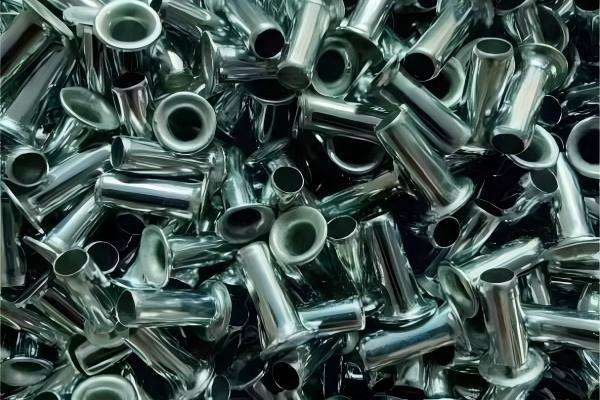
In artificial Christmas tree production, hollow rivets are small parts, but they play a direct role in how stable the final tree feels. They are commonly used with Christmas tree hanging rings or tree hubs to fix artificial branches into position after the branches are inserted into the ring structure.
For a buyer, hollow rivets may look like a simple hardware item at first. But in real factory use, the correct rivet affects branch stability, assembly speed, product appearance, and whether the finished tree can handle packaging, transport, and repeated opening by end customers.
This guide explains what hollow rivets are, where they are used in artificial Christmas tree production, how black and galvanized rivets differ, and what information buyers should prepare before requesting a quotation.
What Are Hollow Rivets?
Hollow rivets are metal fastening parts with an open center structure. In artificial Christmas tree manufacturing, they are mainly used to secure artificial branches inside Christmas tree hanging rings, hubs, or similar branch-support accessories.
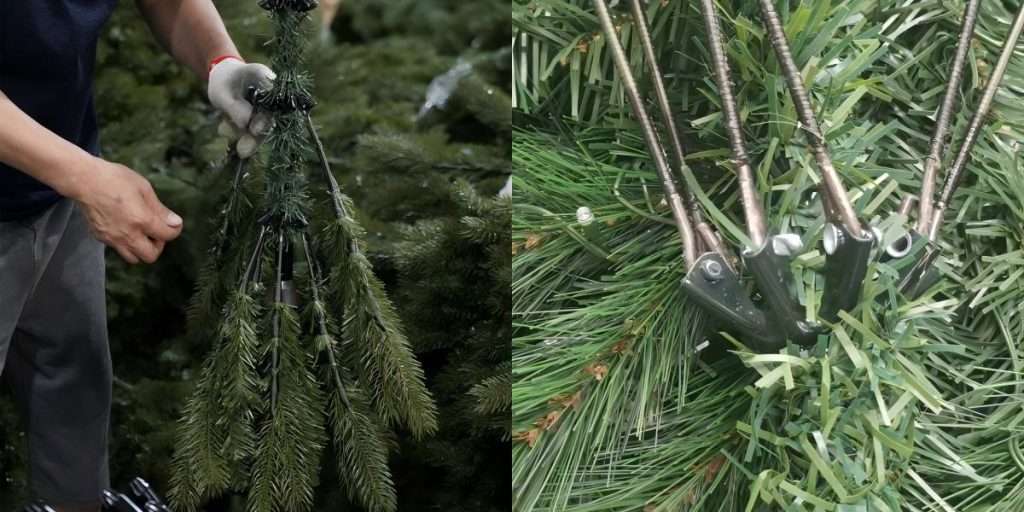
The basic idea is simple: the ring provides a fixed branch position, the branch is inserted into that position, and the hollow rivet is pressed to lock the branch in place. Once the connection is stable, the branch can remain in the correct angle and position during tree assembly and shipping.
For this reason, hollow rivets should not be treated as ordinary loose hardware. They are better understood as part of the artificial Christmas tree assembly system. They need to match the ring hole, branch wire, pressing method, and final tree structure.
If you need a product reference, you can first review RUNYI’s hollow rivets for Christmas tree assembly page.
Why Hollow Rivets Matter More Than They Look
Most buyers will not judge an artificial Christmas tree by looking at the rivet directly. They judge the tree by whether the branches sit firmly, whether the shape looks balanced, and whether the tree feels stable when opened. Hollow rivets influence all of these details.
When rivets are well matched, branch assembly becomes smoother and the finished tree looks more consistent. When rivets are poorly matched, the factory may face loose branches, uneven ring assembly, slower production, or rework before packaging.
This is especially important for factories producing mid-range or export-oriented artificial Christmas trees. A small fastening issue can become visible only after the tree is opened, shaped, or transported. By that stage, correcting the problem is much more expensive than choosing the right rivet at the sampling stage.
Where Hollow Rivets Are Used in the Production Process
Hollow rivets are usually used after the artificial branches and ring structure are ready. The factory first prepares the tree branches, then inserts them into the ring or hub, and finally fixes them with hollow rivets.
Branch Preparation
For PVC artificial Christmas trees, branch production often starts with PVC Christmas tree film. The film is cut and processed into leaves, then bound with wire to form branches. For PE or mixed PE/PVC trees, molded PE tips may also be combined with PVC branches to improve realism.
The branch structure matters because the rivet needs to hold the actual wire and branch thickness. A lightweight inner branch and a heavier visible outer branch may not require the same fastening strength.
Ring or Hub Assembly
Christmas tree hanging rings and hubs create the fixed positions for the branches around the trunk. These parts decide the spacing, angle, and overall fullness of the tree.
The hollow rivet works together with this structure. If the ring hole is not matched with the rivet diameter, the branch may be too loose or the ring may be damaged during pressing.
Rivet Pressing and Final Inspection
After the branch is inserted, the hollow rivet is placed and pressed. The goal is to create a secure fixing point without deforming the ring or damaging the branch.
After pressing, the factory should check whether the branch is stable, whether the ring remains in good shape, and whether the appearance is acceptable for the target product level. This inspection is important before the assembled tree sections move to packaging.
For a broader production overview, you can also review RUNYI’s guide on how to make an artificial Christmas tree.
Black Hollow Rivets vs Galvanized Silver Hollow Rivets
RUNYI commonly supports two practical hollow rivet options for artificial Christmas tree production: black hollow rivets and galvanized silver hollow rivets. Both can be used for branch fixing, but they serve slightly different needs.
Black Hollow Rivets
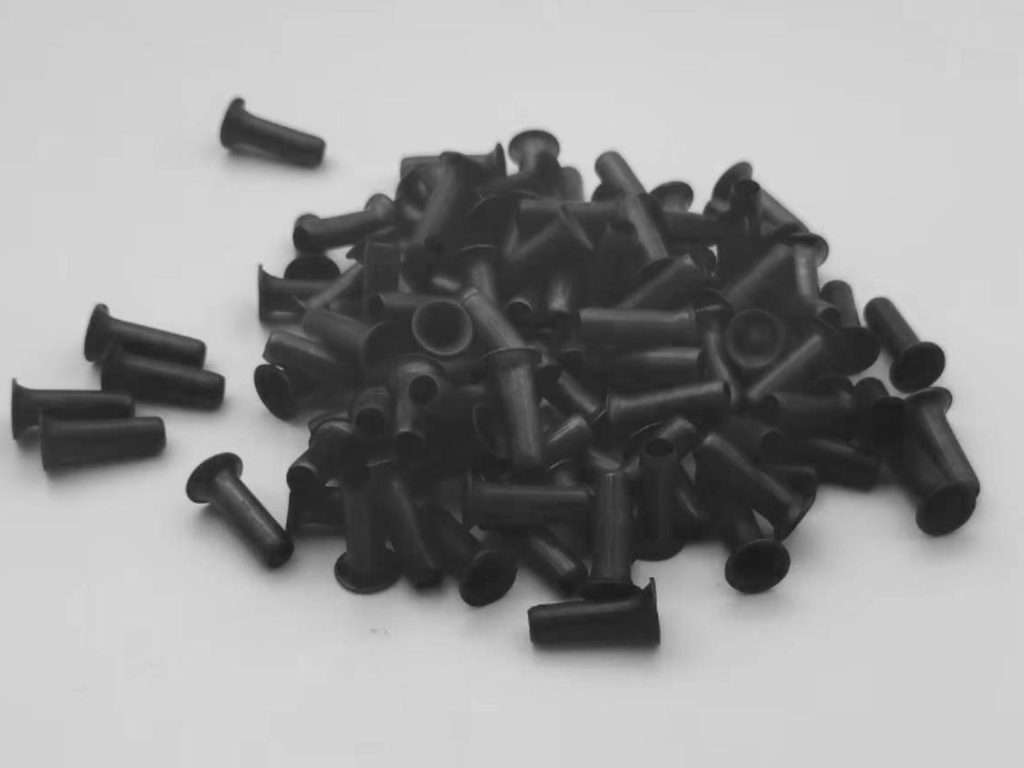
Black hollow rivets are often chosen when the fastening point should visually blend with darker tree structures, black rings, or shadowed branch areas. For many standard artificial Christmas tree products, black rivets create a cleaner visual effect because they are less noticeable after assembly.
Galvanized Silver Hollow Rivets
Galvanized silver hollow rivets are usually selected when buyers prefer a brighter metal finish or need better surface protection during storage and shipment. The galvanized surface can help improve the appearance and reduce the risk of obvious surface oxidation under normal handling conditions.
For export orders, especially when products may stay in storage for a period before final assembly or sale, galvanized silver rivets can be a practical choice.

How to Choose Hollow Rivets for Your Factory
The right hollow rivet depends on more than the rivet itself. Buyers should think about the complete assembly environment: the ring hole, branch thickness, pressing method, surface requirement, and order quantity.
Match the Ring and Branch Structure First
The first question is whether the rivet matches the Christmas tree ring or hub. A rivet that is too small may not secure the branch properly. A rivet that is too large may slow down assembly or damage the ring during pressing.
The branch structure is just as important. Branches with different wire diameters, leaf density, and finished weight may need different fastening performance. This is why sending real samples, photos, or drawings is more useful than only asking for a generic rivet price.
Check Surface Finish and Appearance
The surface finish should match the final product style. Black rivets are usually less visible in darker assembly areas, while galvanized silver rivets offer a cleaner metal look and better surface protection.
If the rivet area is visible on the finished tree, the appearance should be checked under normal lighting and display conditions. A small color mismatch may not matter for low-visibility areas, but it can affect the perceived quality of premium tree products.
Confirm Assembly Compatibility
Hollow rivets should work smoothly with the factory’s pressing process. A good rivet should deform consistently during pressing and create a stable connection without requiring too much manual adjustment.
If the rivet is too hard, too soft, or inconsistent across batches, workers may need more time to complete assembly. In mass production, that extra time can affect the entire output schedule.
Common Problems When Hollow Rivets Are Not Matched Correctly
Most hollow rivet problems are not dramatic at the beginning. They usually appear as small assembly issues that grow into larger production delays.
Loose branches are one of the most common signs. This may happen when the rivet is too small, the ring hole is not matched, or the pressing force is not suitable. Another common issue is ring deformation, especially when the rivet size is too large or the assembly process applies too much pressure.
Surface problems can also appear during storage or shipping. If the finish is not suitable for the buyer’s environment, the rivet may show marks or oxidation more easily. For buyers exporting finished trees, this can affect the impression of the product even if the tree structure is still usable.
The safest way to avoid these problems is to test rivets with the actual branch and ring before bulk production. A small sample test is much cheaper than correcting a container-level order after assembly.
Hollow Rivets and Related Christmas Tree Components
Hollow rivets are only one part of the artificial Christmas tree production system. They usually work together with rings, hubs, branches, wire, PVC film, and assembly machines.
For example, the rivet fixes the branch into the ring, but the ring itself must also be strong enough. The branch wire must have suitable thickness. The branch binding process must create a branch structure that can be inserted and fixed smoothly. If one part of the system is not matched, the rivet alone cannot solve the full assembly problem.
This is why many buyers prefer to discuss hollow rivets together with matching Christmas tree hanging accessories, artificial Christmas tree hubs, and production materials instead of buying each item separately without checking compatibility.
What to Send When Requesting a Quotation
To help RUNYI recommend the correct hollow rivets, buyers should provide practical production information rather than only asking for a general price.
| Information to Provide | Why It Matters |
|---|---|
| Current rivet size or sample photo | Helps identify the required specification |
| Ring or hub photo | Confirms how the rivet will be used |
| Ring hole size | Helps match rivet diameter |
| Branch wire diameter | Affects fixing strength |
| Tree type | PVC, PE, or mixed PE/PVC trees may use different structures |
| Preferred finish | Black or galvanized silver |
| Estimated quantity | Helps with quotation and packaging planning |
| Destination country | Helps estimate export packaging and shipping needs |
If the buyer is not sure about the exact rivet size, sending photos or samples is the best starting point. RUNYI can help check whether the rivets, rings, and branch structure are suitable for the intended production method.
Why Work With RUNYI for Hollow Rivets?
RUNYI Crafts is not only supplying a small metal part. We focus on materials and machinery used in artificial Christmas tree production, so we understand how hollow rivets fit into the wider factory workflow.
For buyers who already have a production line, RUNYI can help match hollow rivets with existing branches and rings. For buyers setting up a new line, we can discuss rivets together with PVC Christmas tree film, branch binding machines, tree hubs, hanging accessories, and other supporting materials.
This matters because artificial Christmas tree production is a system. A good supplier should help buyers reduce trial-and-error during sampling, not simply quote the cheapest rivet without understanding how it will be used.
Related pages that may help your sourcing discussion include Christmas tree branch binding machine,
PVC Christmas tree film, and
artificial Christmas tree production guide.

Need Hollow Rivets for Artificial Christmas Tree Production?
If you are sourcing hollow rivets for artificial Christmas tree assembly, RUNYI can help you check the suitable specification based on your tree ring, branch structure, and production method.
Send us your rivet size, ring sample, branch sample, expected quantity, and destination country. If you are still comparing options, photos or product drawings are enough for the first discussion.
RUNYI can support hollow rivets, matching Christmas tree hanging accessories, and related production materials for artificial Christmas tree factories. Contact us to request samples, product details, or a quotation for your next production project.
FAQ About Hollow Rivets
What are hollow rivets used for in artificial Christmas tree production?
They are used to fix artificial Christmas tree branches into hanging rings, hubs, or similar branch-support structures. Their main function is to keep branches stable after assembly.
Are black hollow rivets and galvanized silver rivets used for the same purpose?
Yes, both can be used for branch fixing. Black rivets are often chosen for a less visible appearance, while galvanized silver rivets are often selected for a cleaner metal finish and better surface protection.
Can hollow rivets be purchased together with Christmas tree rings?
Yes. In many projects, hollow rivets and Christmas tree rings should be discussed together because the rivet must match the ring hole and branch structure.
How can I choose the correct hollow rivet size?
The best way is to provide your current rivet sample, ring hole size, branch wire diameter, or product photos. RUNYI can help check the matching specification before bulk production.
Does RUNYI only supply hollow rivets?
No. RUNYI also supports related artificial Christmas tree production materials, hanging accessories, hubs, PVC Christmas tree film, and production machinery.
Key Takeaways
Hollow rivets are small but important fastening parts for artificial Christmas tree branch assembly. They are commonly used with Christmas tree hanging rings or hubs to keep branches stable and properly positioned.
The best rivet choice depends on the ring hole, branch wire, surface finish, pressing method, and production quantity. Black rivets and galvanized silver rivets can both work, but they serve different appearance and storage needs.
For the safest sourcing process, buyers should test hollow rivets with the actual ring and branch structure before bulk production. If you need help choosing the right specification, RUNYI can support sample discussion, matching accessories, and production material recommendations.
Have Questions?Contact Our Experts to Get Your Questions Answered
If you have any other questions, please do not hesitate to contact us. Our professional team will be happy to answer your questions.