What Is Yellow Core Paint? A Practical Guide for Artificial Christmas Tree Production
In November 2025, a buyer named Andre was finishing samples for a premium PE Christmas tree program. The leaf shape was approved. The PE pellets were locked in. The flocking effect looked clean. But when the retailer compared the sample tree against a real cut branch, one comment changed everything: the branch core looked too plastic. The fix was not in the mold. It was not in the pellet. It was in a finishing material the team had treated as a low-priority detail — yellow core paint.
That is a common mistake. Yellow core paint is easy to overlook because it sits inside an already complex production list of molds, pellets, wire, glue, and machines. But for buyers selling mid-range or premium PE Christmas trees, the core color is one of the visual details that separates a tree that looks “real enough” from a tree that just looks “molded.” When the paint is wrong, retailer feedback can stall the entire program even after every other component has been approved.
This guide explains what yellow core paint is, where it is used, how it compares with leaving the core untreated, and what factories should check before approving a sample. If you want the fastest product reference, start with RUNYI’s Yellow-Core Painting Machine page, then compare it with the wider artificial Christmas tree production materials system.
Need a quick shortcut? If you are already running a PE Christmas tree line, review the Yellow-Core Painting Machine together with PE injection mold and PVC coated iron wire before approving the next paint sample.
What Yellow Core Paint Is
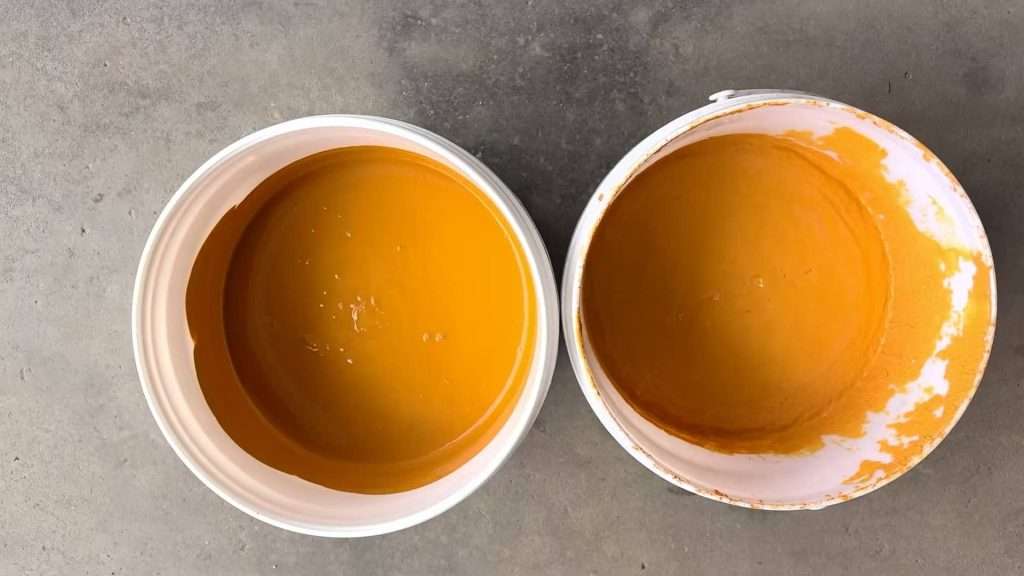
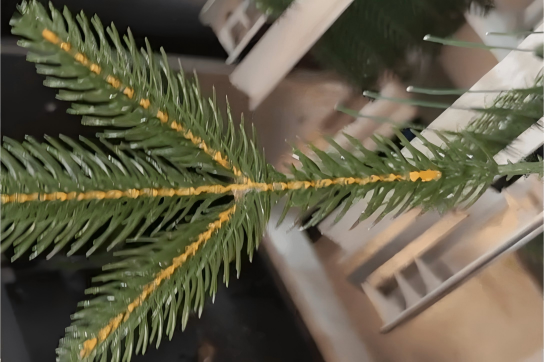
Yellow Core Paint is a coloring or coating material used to create a natural-looking core color in artificial Christmas tree components. Instead of leaving the core area plain green, black, or plastic-looking, manufacturers apply yellow core paint to add a more realistic transition between the leaf surface and the inner branch structure.
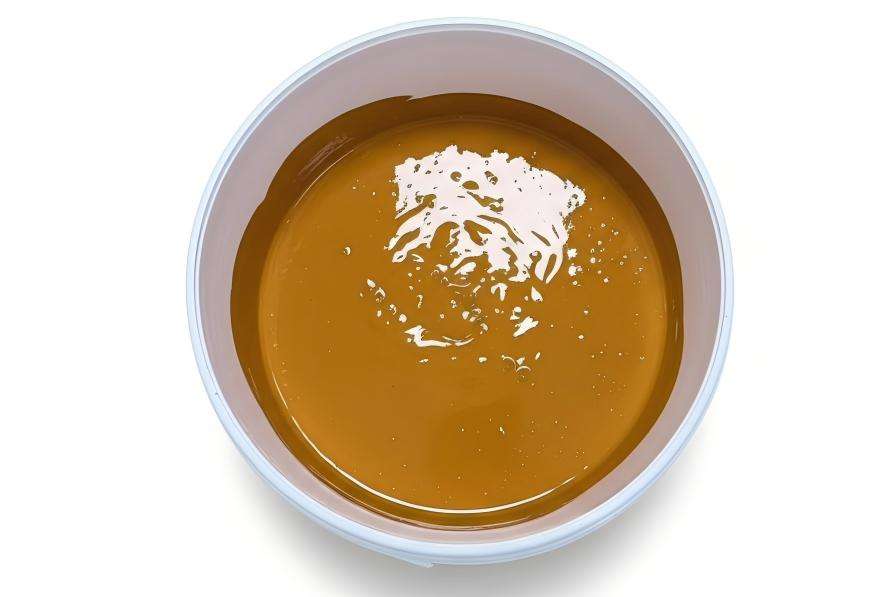
The exact color may vary depending on the product style. Some factories need a bright yellow tone. Others may prefer golden yellow, brownish yellow, light brown, or a muted natural branch color. The goal is not simply to make the material yellow. The goal is to make the artificial branch look more natural and visually layered.
In many PE Christmas tree designs, the outer shape and texture come from the mold, while the core color is finished through a separate coloring process. Yellow Core Paint helps complete this visual detail.
Britannica describes paint as a coating that combines pigment, binder, and solvent to provide both color and adhesion to a surface. Britannica also describes polyethylene as a widely used thermoplastic with a smooth, low-energy surface. That combination matters for buyers because PE is not a naturally easy surface for paint to grip. The right yellow core paint has to be formulated to handle this, not just colored to look correct in a container.
Why Buyers Search for Yellow Core Paint
Most buyers searching for this term are not doing general materials research. They are usually trying to answer one of these questions:
- Which paint can I use on PE Christmas tree leaves and branch tips?
- How do I get a more natural core color instead of a plastic look?
- Should the paint be applied manually or with a yellow-core painting machine?
- Can one supplier support both the paint and the related production equipment?
That is why the keyword sits between information and procurement. The search is broad enough to need education, but close enough to purchase that buyers also want product clarity, application guidance, and supplier confidence.
Where Yellow Core Paint Is Used
Yellow core paint is best understood as a finishing material rather than a stand-alone commodity. It becomes valuable when you place it inside the PE Christmas tree workflow.
PE Christmas Tree Leaves
PE Christmas tree leaves are usually made by injection molding. The mold defines the leaf shape, texture, and sometimes the branch structure. After molding, the leaf or branch tip may need additional color treatment to create a more natural core effect.
In this case, yellow core paint helps the PE leaf look more complete. If your factory produces PE Christmas tree branches, you may also need to consider the relationship between paint, PE injection machine, and custom PE injection mold design.
PE Branch Tips
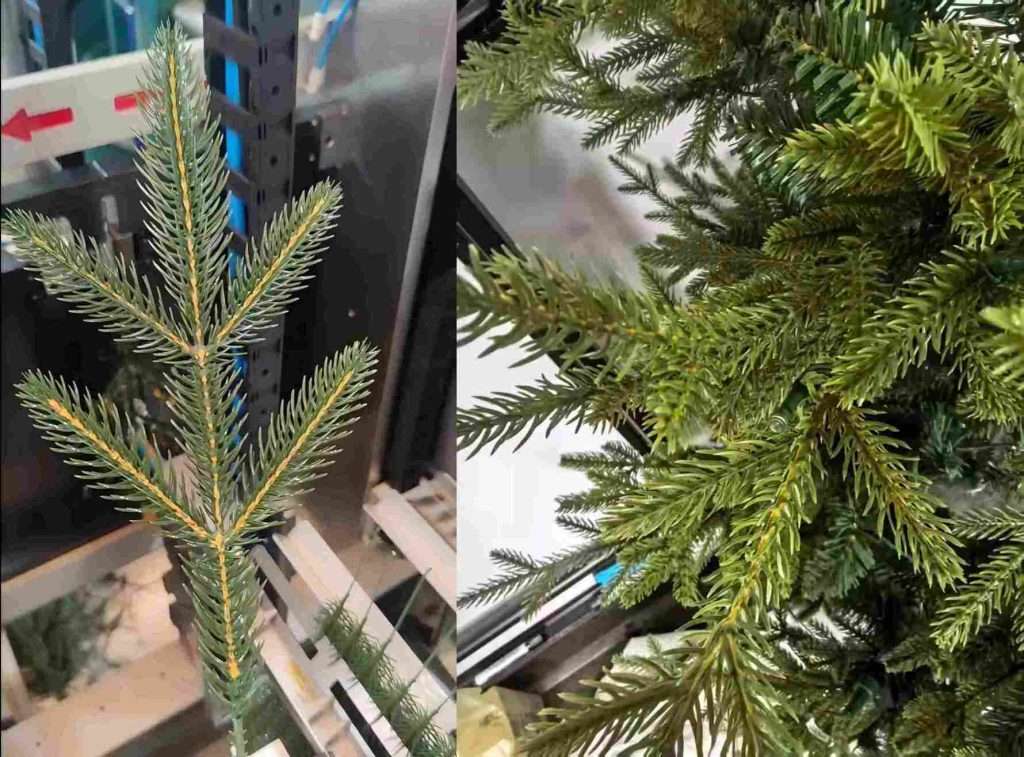
PE branch tips are often used on the visible outer sections of artificial Christmas trees. Because these parts are highly visible, the color detail matters more. A natural yellow or brownish core can improve the appearance of branch tips when viewed up close, especially under retail lighting where shoppers compare trees side by side.
Mixed PE/PVC Christmas Trees
Many manufacturers use a mixed structure: PE tips on the outside for realism and PVC branches inside for volume and cost control. In this product type, yellow core paint is mainly used to enhance the PE parts and create stronger visual contrast.
For example, in a mixed PE/PVC program targeting a European retail chain, skipping the core paint step to save cost can backfire quickly in the showroom. Branches without core paint tend to look flat next to painted samples, and a retailer reviewing both side by side may question whether the new program is really a step up from a basic line. On premium PE programs, core paint is not optional polish. It is part of the visual story.
For factories working with multiple materials, RUNYI’s Artificial Christmas Tree Production Materials page can help buyers understand related materials used in tree production.
Wire and Branch Core Areas
Some artificial tree branches rely on wire-based structures. When the visible core or branch center needs a natural color, yellow core paint may be used depending on the surface material and production process. If your branch structure uses wire support, you may also need to consider the compatibility between paint and PVC coated iron wire.
If your project is still in setup mode, review RUNYI’s full artificial Christmas tree production materials range before finalizing only one material in isolation.
Yellow Core Paint vs No Core Treatment
This is one of the most useful buying comparisons.
Why Skipping Core Paint Is Not Always Cheaper
Leaving the branch core untreated may seem cheaper at first, but it does not give the same visual result as a properly painted core. Buyers selling into mid-range or premium retail programs often need more than a clean molded leaf. They need a tree that holds up to close inspection, looks layered under retail lighting, and matches the visual standard a retailer or customer expects.
Without core treatment, the PE leaf can look molded rather than natural. That gap may not show in a product photo, but it shows in a showroom and on a sales floor.
What Yellow Core Paint Adds
The paint helps create a more suitable surface for premium product positioning. It can improve:
- natural branch appearance
- color transition between the leaf and branch center
- visual depth of PE branch tips
- premium feeling of PE Christmas trees
- realistic effect for mixed PE/PVC trees
- product differentiation for retail buyers
That does not mean every yellow core paint is identical. Buyers still need to check color tone, adhesion, drying speed, and machine compatibility. But the reason yellow core paint exists in this market is practical, not cosmetic.
Manual Application vs Machine Application
There is a second comparison that matters: how the paint will be applied.
Manual application may be suitable for small sample development, low-volume orders, product testing, color approval, and special custom items.
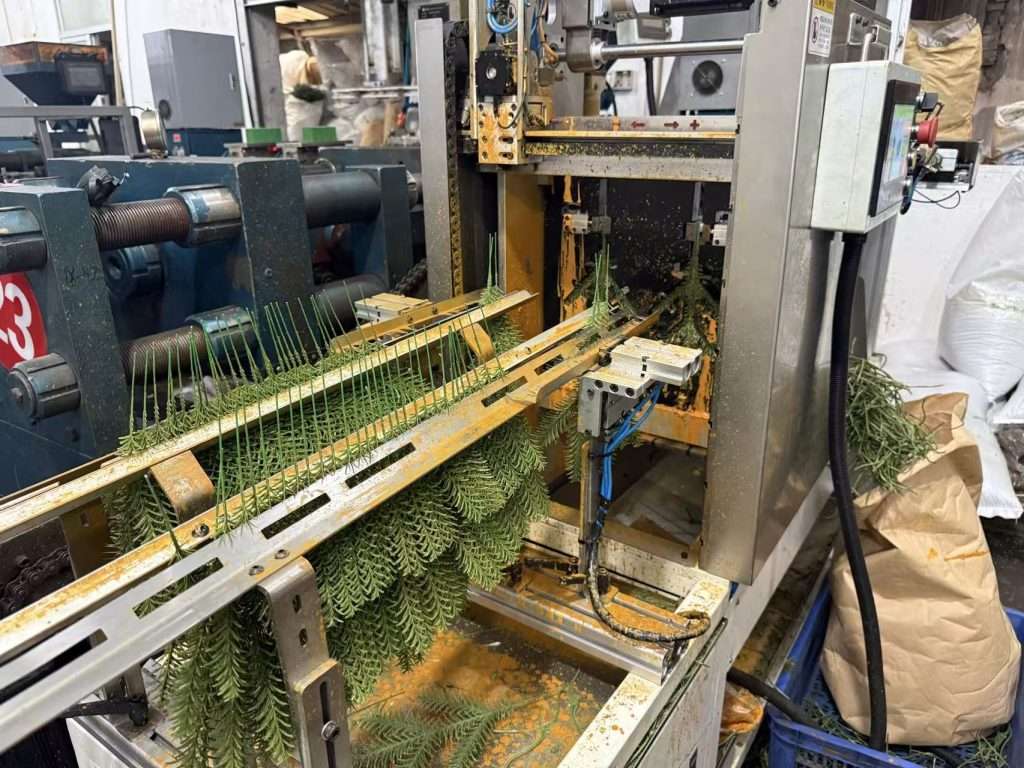
Machine application — typically through a Yellow-Core Painting Machine — is more suitable for stable mass production, higher output requirements, more consistent coating, reduced manual labor, and better production repeatability.
This distinction is important because a paint that looks fine when brushed on a sample may not flow well in a continuous machine process. A buyer who ignores this detail may approve the wrong sample and lose time later in line setup.
The Buyer Rule of Thumb
If you are producing a PE tree component that needs realistic visual detail and a more production-ready surface, yellow core paint is usually the better starting point than no core treatment. If you are unsure whether manual or machine application fits your process, sample evaluation should happen before volume commitment.
Key Properties to Evaluate
When evaluating Yellow Core Paint, factories should look beyond the color in the container. The real test is how the paint performs on the actual production material.
Color Tone
Color tone is the first factor most buyers notice. But there is no single standard yellow color for all Christmas tree designs. The right tone depends on the tree species, branch style, customer requirement, and final market positioning.
Common color directions include bright yellow, golden yellow, brownish yellow, light brown, and natural wood-like tones. Before production, compare the painted sample with the approved tree sample, not just with a color card.
Adhesion
Adhesion means how well the paint stays on the material surface after drying. Poor adhesion may lead to peeling, uneven color, or color loss during handling and assembly. For best results, test the paint on the actual PE leaf, wire surface, or branch material that will be used in production.
Drying Speed
Drying speed affects production efficiency. Paint that dries too slowly may slow down the line, create surface marks, or require extra storage space. Paint that dries too quickly may be difficult to apply evenly, especially in machine-based production. The best drying speed depends on the factory environment, production speed, and application method.
Surface Finish
Surface finish affects the final visual quality. Some products require a matte, natural look. Others may accept a slightly brighter finish. Excessive gloss may make the branch look less natural. Factories should check the dried surface under normal lighting and retail-style lighting.
Machine Compatibility
If the paint is used with a yellow-core painting machine, viscosity, flow behavior, and drying time become more important. A paint that works manually may not always perform well in a continuous machine process. Before bulk use, test whether the paint runs smoothly through the machine and creates a consistent coating result.
Common Mistakes Buyers Make
The most expensive yellow core paint mistakes are usually not dramatic. They are sample-stage decisions that slow production later.
Choosing Paint Based Only on Color Photos
Lighting, material surface, and drying condition can all change the final color. A paint that looks correct in a supplier photo may not match the approved tree sample after it dries on a real PE leaf.
Approving a Sample That Was Only Brushed by Hand
A paint that looks fine when brushed on a small sample may behave differently when run through a yellow-core painting machine. Buyers who skip the machine test during sampling often discover viscosity or flow problems only after volume commitment.
Treating Drying Speed as a Minor Detail
Drying speed is one of the fastest ways for a paint to slow down a line. Buyers should test drying time under real factory conditions, not just under sample-room conditions.
Choosing on Price Alone
The cheapest paint can become the most expensive choice if it creates inconsistent surface effects, peels during assembly, or makes the branch look less natural in retail conditions. A common pattern is selecting the lowest-cost option for both standard and premium PE programs because the visual samples look similar in the container, then discovering during the first production run that the cheaper paint does not match the premium program’s color standard after drying, or that adhesion on wire-based branch sections is inconsistent. The correction is usually not catastrophic, but it delays line validation and forces another round of sample review. The issue is avoidable when the paint is matched to the actual production surface and the intended product standard before bulk commitment.
How to Test Yellow Core Paint Before Bulk Production
Sample testing is the safest way to confirm whether yellow core paint is suitable for your production line.
A practical test should include applying the paint to the actual material, checking color after full drying, testing adhesion by handling and light scratching, observing the surface under different lighting, checking drying time in factory conditions, testing with the actual painting machine if applicable, and comparing the finished sample with the approved product. The sample result should be approved before moving to bulk production.
What Buyers Should Send for a Faster Sample Discussion
If you want a supplier to recommend a suitable yellow core paint, provide clear production details. This helps avoid generic suggestions and improves sample accuracy.
| Information | Why It Helps |
|---|---|
| Application | PE leaves, branch tips, wire core, or mixed tree branches |
| Target color | Helps match the required yellow, golden, or brownish tone |
| Material surface | Different surfaces may require different adhesion performance |
| Production method | Manual or machine application affects paint requirements |
| Machine type | Helps evaluate viscosity and flow compatibility |
| Quantity | Supports sample planning, packaging, and pricing |
| Destination | Helps plan shipping and export packaging |
| Special requirement | Drying speed, surface finish, odor control, or packaging |
The more specific your information is, the easier it is to choose the right paint.
How Yellow Core Paint Fits Into a Full Christmas Tree Production System
A good supplier discussion becomes much easier when the paint is not treated as an isolated SKU.
Yellow core paint often works alongside molded PE leaves, support wire, branch assembly equipment, and other finishing materials. RUNYI’s Christmas Tree Machinery Series and Artificial Christmas Tree Production Materials pages place yellow core paint in the context of the wider production setup, so buyers can see how the paint fits with molds, machines, wire, and finishing materials at the same time.
When a factory is small, buyers may source materials piece by piece. As volume grows, that approach becomes riskier. Differences in timing, specification, and supplier communication start to affect output stability. That is where system thinking helps. A buyer who understands how paint, machines, and PE materials interact usually avoids more sampling errors than a buyer who only compares lowest prices.
If your project goes beyond paint sourcing and into full line planning, RUNYI’s Artificial Christmas Tree Production Solution page is a useful next step.
FAQ About Yellow Core Paint
What is Yellow Core Paint used for?
Yellow Core Paint is used to create a yellow, golden, brownish, or natural core color effect on artificial Christmas tree leaves, PE branch tips, wire-based structures, or related tree components.
Is Yellow Core Paint only used for PE Christmas trees?
It is commonly used for PE Christmas tree leaves and PE branch tips, but the actual application depends on the material surface, product style, and production method.
Why does Yellow Core Paint need sample testing?
Sample testing helps confirm the final color, adhesion, drying speed, surface finish, and production compatibility before bulk use.
Can Yellow Core Paint be used with a machine?
Yes, if the paint is compatible with the machine setup. For machine-based production, viscosity, flow behavior, and drying speed should be tested before mass production.
How do I choose the right yellow tone?
Choose the tone based on the approved tree sample, target product style, customer requirement, and final market positioning. A natural muted tone is often better for realistic PE branches than an overly bright yellow.
Final Thoughts
Yellow core paint is easy to overlook because it is usually one of the smaller materials in a Christmas tree production list. But in production terms, it is one of the materials helping PE leaves and branch tips look natural, hold a premium feel, and meet retailer expectations.
That is why good sourcing starts with the application, not the product name alone. Define whether the paint will be used on PE leaves, branch tips, wire-based cores, or mixed branches. Confirm color tone, adhesion, drying speed, and surface finish. Then evaluate it together with the other materials and equipment shaping the same production line.
Key Takeaways
- Yellow core paint is best understood as a finishing material that affects perceived realism, not a generic decorative color.
- In PE Christmas tree production, it often serves as the visual core color for leaves, branch tips, or wire-based structures.
- Buyers should compare more than color name; adhesion, drying speed, surface finish, and machine compatibility matter too.
- Manual application and machine application are not interchangeable by default.
- The best buying decisions happen when yellow core paint is evaluated together with PE molds, wire, machines, and the intended production process.
Have Questions?Contact Our Experts to Get Your Questions Answered
If you have any other questions, please do not hesitate to contact us. Our professional team will be happy to answer your questions.