What Is Flocking Powder? Uses, Types, and Buying Guide

In late October, a buyer named Tomas was rushing to finalize materials for two very different Christmas projects. One was a factory order for flocked artificial trees. The other was a set of winter display props for a chain of shopping malls. On paper, both jobs needed a “snow powder” effect. In practice, they needed different materials, different application methods, and different supplier conversations. The delay happened because the team treated flocking powder as a single generic product instead of a category with more than one use path.
That is a common mistake. Flocking powder sounds simple, but buyers quickly discover that the right option depends on whether the material will be sprayed by machine, applied to decorative scenes, or compared against hand-applied snow products. If the workflow is not clear, sample approval gets messy, production tests take longer, and costs rise for avoidable reasons.
This guide explains what flocking powder is, where it is used, how machine-use and snow-scene flocking powder differ, and what buyers should confirm before placing an order. If you want the fastest starting point, RUNYI’s flocking powder for machine use page is the right first stop for factory production, while flocking powder for snow scenes is better for decorative applications.
Need a quick shortcut? If your project involves flocked Christmas trees, wreaths, or scaled production, start with RUNYI’s flocking powder for machine use. If your project is built around windows, wedding scenes, photoshoots, or stage decoration, compare flocking powder for snow scenes first.
What Flocking Powder Is
Flocking powder is a decorative material used to create a soft, snow-like surface effect on artificial Christmas trees, wreaths, vines, props, and winter display scenes. In practical buyer language, it is the material that helps turn plain green surfaces into flocked, snowy, or wintry-looking products.
What matters is that flocking powder is not only about color. It is about effect, workflow, and surface finish. Buyers choose flocking powder because they want a more textured and realistic snow look than ordinary decorative powder can usually provide.
In many commercial applications, flocking powder is associated with short synthetic or semisynthetic fibers. Britannica’s overviews of viscose rayon and nylon help explain why fiber-based materials are widely used in industrial and decorative applications where surface feel, softness, and durability matter. In the Christmas decoration industry, that surface effect becomes part of the visual value of the finished product.

Why Buyers Search for "Flocking Powder"
Some buyers already know they need a snow-like flock material but are unsure whether they need machine-use flocking powder, a scene-decoration version, or a simpler decorative snow powder. Others are entering the artificial Christmas tree business for the first time and need to understand the material system before they can even ask the supplier the right questions.
That is why the keyword often sits between information and procurement. A buyer searching for flocking powder is not only curious about definition. They are often trying to decide:
- which flocking powder fits the project
- whether glue or machinery is required
- whether the material is for factory production or decorative use
- which supplier can support repeat orders
Where Flocking Powder Is Used
The most useful way to understand flocking powder is to start with the end scene or production process.
Flocked Christmas Tree Production
This is one of the most important commercial applications. RUNYI positions flocking powder for machine use as a material used for spraying snow on PVC trees, PE trees, mixed trees, wreaths, vines, and simulation props. In these workflows, flocking powder is not sprinkled by hand. It becomes part of a production system involving a flock machine and glue.
That matters for buyers because factory-scale flocking has different priorities from retail decoration. The supplier conversation needs to cover:
- machine compatibility
- glue matching
- coating consistency
- output stability
- repeatable appearance across batches

Snow Scenes and Decorative Displays
Not every flocking powder job involves a production line. RUNYI’s flocking powder for snow scenes is positioned for shopping mall windows, storefronts, wedding scenes, photo backdrops, films, advertisements, and Christmas exhibitions. In these cases, the visual effect is still important, but the workflow is more decoration-oriented than production-oriented.
This means buyers are usually thinking about:
- fluffy snow effect
- scene realism under lighting
- cost-effectiveness for temporary decoration
- application over props, display sets, or event surfaces

Seasonal Props, Wreaths, and Vines
There is also a middle ground between factory production and scene decoration. Many holiday products, especially wreaths, vines, and specialty props, need a flocked finish but are not always produced in the same volume as main Christmas tree lines. Buyers in this category often care about both simulation quality and processing flexibility.
In December 2025, a purchasing manager named Elena was sourcing materials for a mixed order that included flocked garlands for a retailer and snow-scene props for a holiday event. Her team initially requested just one “flocking powder” sample to keep procurement simple. The problem surfaced immediately. The material that looked right for scene props was not necessarily the best fit for machine-based garland processing. Once the order was split by workflow, the supplier discussion became much easier.
That story is typical. The best flocking powder choice depends less on the broad product name and more on where the material will actually be used.
Flocking Powder for Machine Use vs Flocking Powder for Snow Scenes
This is the most important distinction for buyers.
Flocking Powder for Machine Use
RUNYI describes flocking powder for machine use as a material used in the powder box of a flock machine together with flock glue, usually water-based glue. After the machine starts, the flocking powder and glue are mixed and sprayed onto the target surface.
This version is better suited to:
- artificial Christmas tree factories
- large-scale flocked wreath production
- repeatable factory output
- buyers who need stable visual consistency
RUNYI also presents this type as having a stable and natural effect, even distribution, and suitability for large-scale production. That combination makes it much more than a decoration accessory. It is part of a process system.
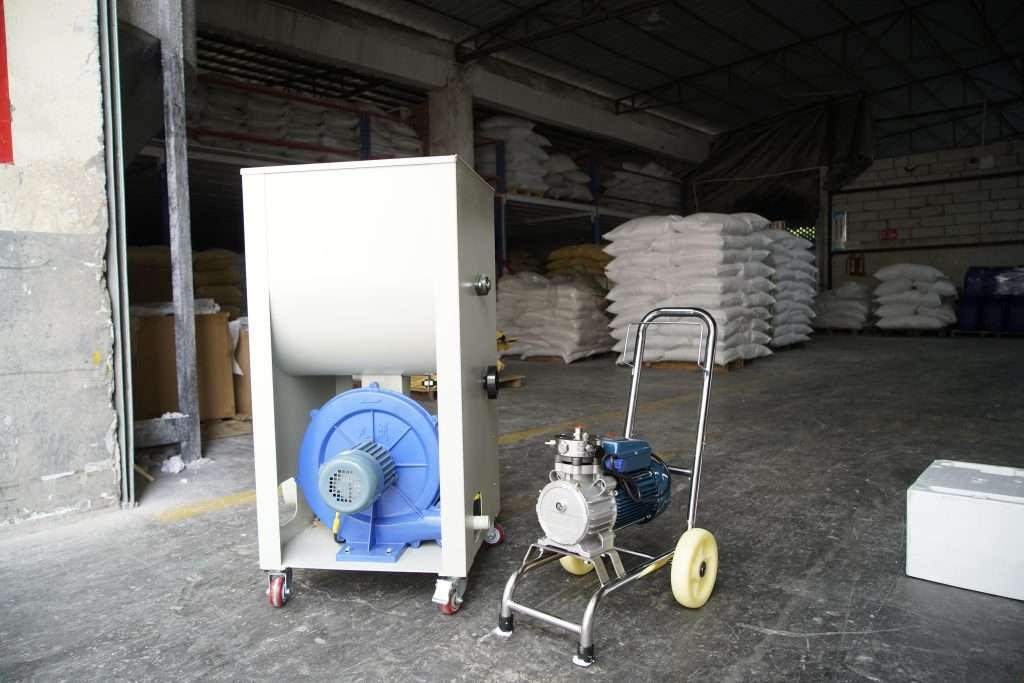
Flocking Powder for Snow Scenes
Flocking powder for snow scenes sits in a different use case. It is aimed more at the finished look of windows, storefronts, event scenes, and other decorative spaces. Buyers here are usually evaluating how the flock presents under lighting, how fluffy or dense it appears, and how easy it is to apply across scenic surfaces.
This version is better suited to:
- shopping mall displays
- photo shoots
- stage decoration
- event backdrops
- Christmas display props
The Buyer Rule of Thumb
If the material is going into a factory snow-spraying workflow, choose machine-use flocking powder first. If the goal is to build a visual snow surface for decoration, displays, or scenes, start with the snow-scene version.
If you are comparing both routes right now, review RUNYI’s flocking powder for machine use and flocking powder for snow scenes side by side before asking for samples.
Flocking Powder vs Dry Snow Powder
Many buyers also confuse flocking powder with dry snow powder. They are related in visual purpose, but they are not the same purchasing decision.
Dry Snow Powder Is Usually Simpler
Dry snow powder is often chosen for hand-applied decorative work, retail packs, DIY projects, and simple scene styling. It is usually easier to allocate and easier to use in smaller decoration settings.
For example, if a retailer wants a small-pack solution for in-store holiday decoration, RUNYI’s 30g small package dry snow powder is likely the more natural comparison point. If the decorative scene needs stronger coverage and better hold, heavy dry snow powder may make more sense.
Flocking Powder Is More Process-Specific
Flocking powder usually enters the conversation when buyers need a stronger flocked effect, a more textured snow appearance, or a machine-assisted process. That is why it often belongs to production lines, scenic finishing, or more specialized decorative systems rather than simple hand-sprinkled holiday decoration.
In February 2026, a wholesaler named Sara was preparing a mixed product catalog for winter retail. She wanted one snow product for tree accessories, one for small display kits, and one for larger scenic projects. Her original assumption was that flocking powder could cover all three. After sample review, the logic changed. Dry snow powder worked better for the kit products, while flocking powder remained the right fit for the more premium flocked looks. The order improved once the material roles were separated.
When to Compare Both
You should compare flocking powder and dry snow powder when:
- the buyer is not yet sure whether the project is decorative or process-driven
- the project includes both flocked products and hand-applied snow scenes
- procurement wants the most cost-effective material for different product lines
RUNYI’s artificial Christmas tree production materials page is useful here because it shows flocking and related materials in the context of a broader production system.
What Buyers Should Check Before Ordering Flocking Powder
Good flocking powder sourcing depends on workflow clarity. The more precise the usage plan, the better the supplier match.
1. Confirm the Application Method
Will the material be applied by machine, with glue, or as part of a decorative scene build? This determines whether the buyer should focus on machine-use flocking powder or a scene-decoration type.
2. Check What Surface Will Be Covered
Are you flocking PVC Christmas trees, PE trees, wreaths, vines, or hard scenic props? Different surfaces can change how the material should be evaluated.
3. Ask About Glue and Supporting Materials
For production workflows, flocking powder is not a stand-alone purchase. It often works together with glue and machinery. That is why buyers should treat flocking powder as one part of a system, not a one-line item in isolation.
4. Think About Order Scale
A factory order, a seasonal importer order, and a one-time decoration project are not the same. Sample quantity, pack size, and repeatability matter more when the project scales.
5. Compare Visual Effect Under Real Conditions
A flock that looks soft and snowy in one image may behave differently in a factory, under storefront lights, or on different surfaces. Buyers should test samples in conditions close to the actual use case whenever possible.
How RUNYI Supports Flocking Powder Buyers
RUNYI’s advantage is that flocking powder is not presented as a disconnected novelty item. It sits inside a broader artificial Christmas tree production materials system that includes raw films, wires, flocking inputs, coating materials, and related production support items.
That matters because buyers rarely solve only one problem at a time. They often need to answer a chain of questions:
- Which flocking powder fits the workflow?
- Does the order also need glue or other production materials?
- Is the project decorative, industrial, or mixed?
- Can the supplier support repeat orders and future expansion?
This is one reason one-stop material suppliers are easier to work with than generic decoration traders. They can help the buyer understand where the flocking powder fits in the wider production or decoration process.
Why This Matters for New Buyers
If a buyer is entering the artificial Christmas tree business for the first time, product names alone can be misleading. “Snow powder,” “flocking powder,” and “dry snow” can sound interchangeable when they are not. A supplier that understands the workflow can reduce that confusion early.
For experienced buyers, the value is different. They usually know what visual effect they want, but they need faster confirmation on material selection, sample suitability, and repeat supply.
Want a clearer starting point? If you are sourcing for factory snow spraying, begin with RUNYI’s flocking powder for machine use. If you are building windows, exhibitions, or scenic props, compare flocking powder for snow scenes first. If your project includes multiple material types, review the full artificial Christmas tree production materials range before placing the order.
Common Mistakes Buyers Make
The most expensive flocking powder mistakes are usually simple.
Treating All Snow Materials as the Same
This creates confusion fast. Dry snow powder, machine-use flocking powder, and snow-scene flocking powder do not all serve the same role.
Asking for a Sample Before Defining the Workflow
Samples are helpful only when the use case is clear. Otherwise, buyers evaluate the wrong thing and lose time.
Ignoring the Supporting Process
For production applications, flocking powder is part of a system that may involve glue, machines, and surface-specific testing.
Choosing on Price Alone
The cheapest material can become the most expensive choice if it creates inconsistent surface effects, slows production, or does not match the intended decorative finish.
In January 2026, a buyer named Karim was sourcing flocking materials for both tree accessories and commercial window displays. He initially selected the lowest-cost option because the visual samples looked similar. Once the first production trial started, the team discovered the cheaper material did not match the intended process. The correction was not catastrophic, but it delayed sampling and increased total project cost. The issue was not that the flocking powder was bad. It was that the material was chosen without matching it to the workflow.
Final Thoughts
Flocking powder is not a one-size-fits-all snow material. It is a category that covers different workflows, different visual effects, and different buyer needs. Some projects need machine-use flocking powder for factory-scale Christmas tree production. Others need a snow-scene version for displays, props, windows, and event decoration. And some projects should compare flocking powder with dry snow powder before deciding at all.
That is the practical way to buy flocking powder: start with the application, define the workflow, and choose the product that matches the process instead of relying on the product name alone.
If you are sourcing snow-effect materials now, compare RUNYI’s flocking powder for machine use, flocking powder for snow scenes, and the broader artificial Christmas tree production materials range before placing the order.
Have Questions?Contact Our Experts to Get Your Questions Answered
If you have any other questions, please do not hesitate to contact us. Our professional team will be happy to answer your questions.