PE Pellets for Artificial Christmas Trees: A Practical Buyer Guide

When a new Christmas tree factory prepares its first PE sample, the conversation usually starts with molds, machine speed, or leaf shape. A week later, the real issue appears: the leaves look uneven, the cycle time drifts, and scrap rises faster than expected. In many cases, the missing variable is not the machine itself. It is the PE pellets feeding the whole process.
That is why buyers who want realistic PE Christmas trees should never treat pellets as a small purchasing detail. The pellet choice influences leaf appearance, molding stability, production efficiency, and even how smoothly the full line runs. If you are planning a new PE tree line or improving an existing one, understanding PE pellets is one of the smartest places to start.
In this guide, we will explain what PE pellets are, why they matter in artificial Christmas tree manufacturing, how they work with a PE injection machine, and what buyers should confirm before placing an order. If you want to see the production material itself first, you can review RUNYI CRAFTS’ PE pellets page.
What Are PE Pellets?
PE pellets are small granules of polyethylene, a widely used thermoplastic known for its processability, durability, and broad industrial use. In the Christmas tree industry, PE pellets are not used for general packaging. They are used as the molding material that becomes realistic PE leaves.
For artificial Christmas tree production, pellets are selected because they can be heated, injected into a mold, shaped into a branch or leaf pattern, cooled, and released in repeatable cycles. That repeatability matters. A Christmas tree factory does not need resin that only looks acceptable in a sample photo. It needs material that runs consistently day after day.
In practical terms, PE pellets are one of the starting points for premium-looking PE artificial Christmas trees. They are part of the raw-material system, not an isolated purchase. At RUNYI, that system sits inside a broader artificial Christmas tree production materials solution that includes other inputs needed for PE tree production.
Why the Keyword "PE Pellets" Matters to Buyers
Some buyers search for “polyethylene pellets” in a broad industrial sense. Others search for “PE pellets” because they already know the material but want a supplier who understands their use case. In the Christmas tree business, the second group is usually closer to conversion. They are not simply learning what PE is. They want to know whether the pellets will work in their line, with their mold, and for their target tree quality.
That is why a niche supplier can add more value than a generic plastic seller. The real question is not only “Can you supply polyethylene pellets?” It is “Can you supply PE pellets that fit an artificial Christmas tree production line?”
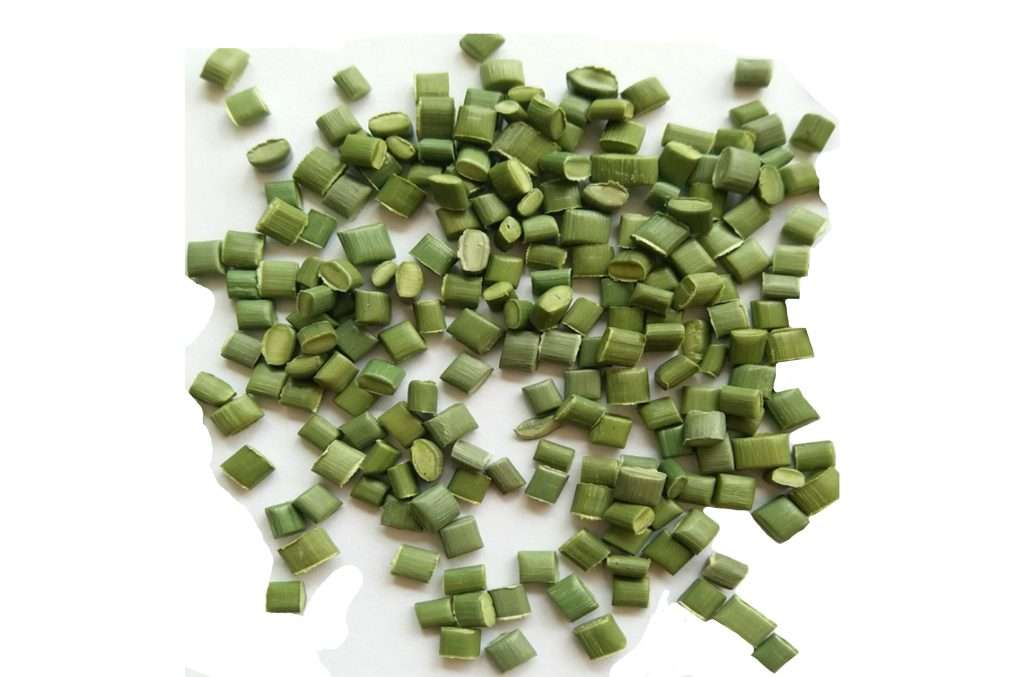
Why PE Pellets Matter in Artificial Christmas Tree Manufacturing
PE Christmas trees are usually chosen when the buyer wants a more realistic leaf appearance than standard PVC trees can deliver. That premium appearance does not come from the mold alone. The material must flow correctly, fill the mold consistently, cool in a stable way, and release without creating avoidable defects.
Think about what the customer sees in the final product: fuller shape, more natural branch texture, and a more premium finish. Now work backwards. Those visible results start with the interaction between pellets, mold design, machine settings, and production discipline.
A Small Material Decision Can Change the Whole Production Line
In October 2025, a buyer named Tomasz from Poland was evaluating a PE tree line for a seasonal decoration factory. On paper, his biggest concern was machine output. But when the first trial batch came back, the issue was visual consistency. Some leaves were crisp and attractive. Others had weaker definition and uneven edges. The machine was not the real problem. The raw-material choice and process matching were.
That story is common. Many buyers invest heavily in machines and molds, then discover that material consistency is what separates a stable production line from a frustrating one. In PE Christmas tree manufacturing, pellets directly affect molding consistency, surface appearance, cycle stability, scrap rate, and repeat order confidence.
PE Trees Need a Different Mindset Than PVC Trees
PVC Christmas trees and PE Christmas trees are not made the same way. PVC lines rely on leaf drawing, cutting, and branch assembly. PE tree leaves are made through injection molding. That difference changes the role of the raw material completely.
If you are comparing both routes, RUNYI’s manufacturing process guide is a useful overview. It shows why PE pellets matter so much in the PE route: they are not a decorative extra. They are the core molding feedstock for leaf production.
Want to compare the full material flow before planning your line? Review RUNYI’s manufacturing process page and map where pellets fit into the PE branch-making sequence.
How PE Pellets Fit Into the PE Christmas Tree Production Process
One of the best ways to understand PE pellets is to see them as part of a connected system. The material does not create realistic leaves by itself. It works together with the machine, the mold, and the supporting parts around the line.
Step 1: Material Feeding
The process begins with PE pellets being loaded into the injection system. At this stage, consistency matters. Factories want pellets that can be fed smoothly and processed in stable cycles rather than material that creates avoidable interruptions.
Step 2: Heating and Injection
Inside the PE injection machine, the pellets are heated and transformed into a moldable state. The machine then injects the material into the leaf mold. This is the step where the line begins to translate raw material into a recognizable tree component.
Step 3: Mold Shaping
The mold gives the leaf its final pattern and structure. Buyers often focus heavily on mold design, and rightly so, but the material still plays a major role. Even a well-designed mold cannot deliver reliable output if the input material behaves inconsistently under production conditions.
Step 4: Cooling and Release
After molding, the formed leaf cools and is released from the mold. A stable process helps the factory keep output predictable and reduces unnecessary waste. That matters even more for buyers building a premium PE tree range, where appearance and consistency are part of the sales promise.
Step 5: Follow-Up Processing and Assembly
Once PE leaves are produced, they move into later branch and assembly steps. If you want to see how the molded leaves connect to the broader tree-building workflow, RUNYI’s PE injection machinery series page helps show how PE leaves fit into the finished product path.
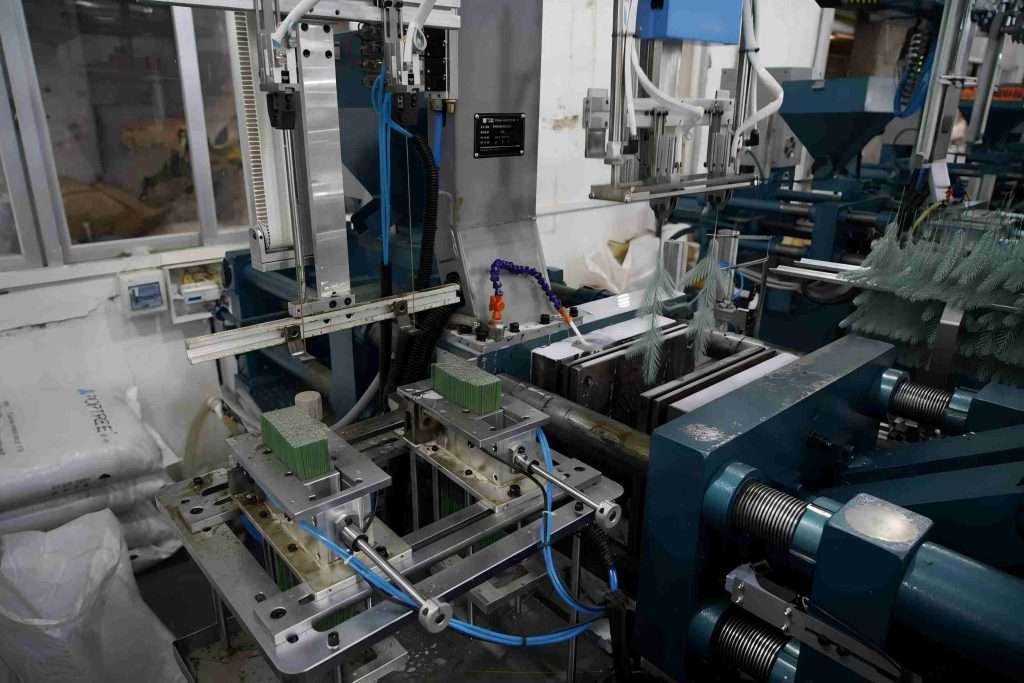
What Buyers Should Check Before Ordering PE Pellets
Not every PE pellet inquiry is at the same stage. Some buyers are ordering samples. Others are pricing a full line. Others are troubleshooting an existing production problem. The most useful supplier conversations begin when the buyer can clearly define what they need the pellets to do.
1. Confirm the End Product You Want to Manufacture
Are you producing entry-level PE branches, more realistic mixed trees, or a high-end full-PE tree? Your target product quality affects how you should discuss materials, molds, and machine configuration with the supplier.
A factory aiming at premium retail export lines will usually care more about leaf detail, consistency, and visual finish than a factory making lower-cost seasonal volume products.
2. Match Pellets to Machine and Mold Conditions
Pellets should not be discussed in isolation from the machine. A serious supplier should ask how the line is configured, what kind of output you expect, and how the pellets will be processed. That is one reason working with a supplier that understands the PE injection machine can be more helpful than buying generic resin from a broad commodity source.
3. Clarify Color and Production Needs
Some factories want standard green shades. Others need custom colors for specific tree styles or customer programs. If color matters to your final line, it should be discussed early, not after sample approval.
4. Ask About Packaging, Lead Time, and Repeat Supply
The first order is not the whole story. If your line scales well, you need to know whether the same material quality can be supplied again with reasonable consistency. That means buyers should ask about packaging format, order quantity planning, lead time, repeat batch stability, and export support.
5. Understand the Full Material Ecosystem
PE pellets are not the only PE-tree raw material. PE leaf production also involves supporting materials and later-stage processes. The more complete your line planning is, the fewer surprises you will face after installation.
In January 2026, a buyer named Melissa was sourcing for a factory in Mexico that wanted to move from trading finished trees to producing its own PE branches. Her first request was simply for pellet pricing. After a longer discussion, the real requirement became obvious: she needed not only the pellets, but also help aligning molds, the injection machine, and later branch processing. That is exactly where a one-stop supplier saves time.
PE Pellets vs. Other Material Decisions in Christmas Tree Production
The phrase “PE pellets” sounds specific, but buyers often compare it mentally with broader material choices in their factory. The most common comparison is not between one pellet and another. It is between the PE production route and the PVC route.
PE vs. PVC in Practical Production Terms
PVC Christmas trees are widely used because they are cost-effective and easier to scale at lower price points. PE Christmas trees are usually chosen for more realistic appearance and higher-end positioning. That does not automatically make PE better for every factory. It makes PE better for certain market goals.
If your customer base wants natural-looking tips and a more premium retail impression, PE is often worth the extra complexity. If your market is mainly cost-sensitive and volume-driven, PVC may still be the better path for part of your catalog.
Why PE Pellets Are a Strategic Purchase, Not Just a Raw Material
A supplier who only sells pellets may give you a price. A supplier who understands Christmas tree production can help you make fewer expensive mistakes. That difference matters because the cost of a wrong material decision is rarely limited to the material invoice. It can affect startup delays, trial waste, lower output, inconsistent leaf appearance, and customer complaints after production.
This is why many buyers prefer discussing PE pellets inside a complete production conversation rather than buying on price alone.
If you are planning a full PE line instead of buying material only, start with RUNYI’s production materials page and then review the PE injection machine page to see how both fit together.
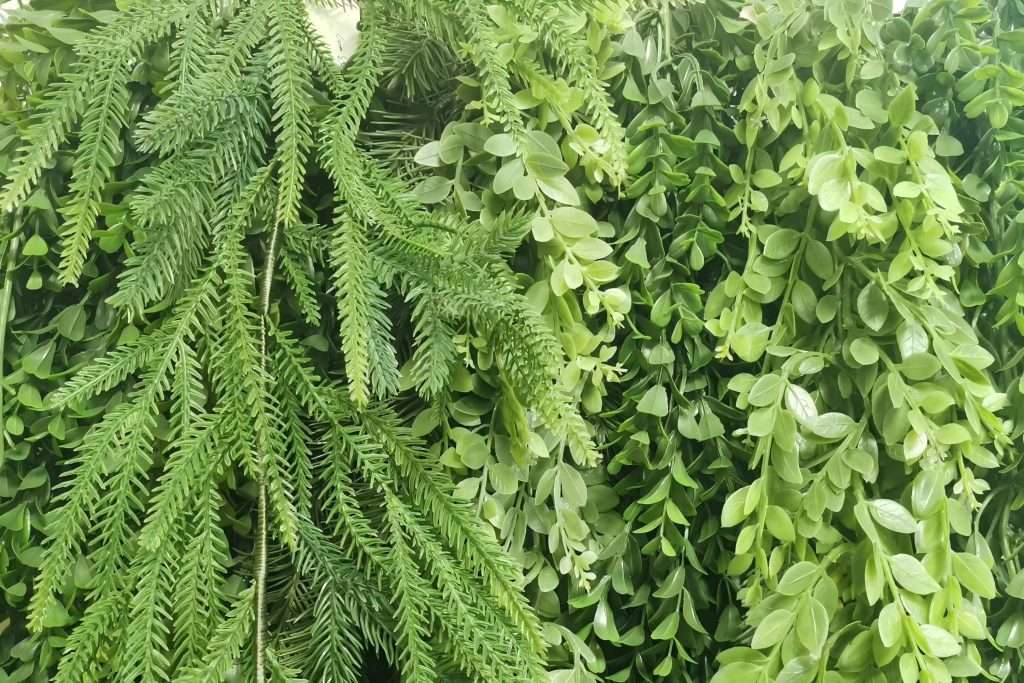
How to Source PE Pellets as Part of a Complete Production Line
The best sourcing decisions usually happen when the buyer moves from product thinking to system thinking. Instead of asking only, “What is your PE pellet price?” ask, “What will help my PE tree production run more reliably over time?”
Look for a Supplier Who Understands the End Product
This sounds simple, but it changes the entire quality of the conversation. A general resin supplier may understand polymer categories. A niche supplier like RUNYI can connect pellets to Christmas tree leaf production, machine setup, and broader material planning.
Ask for Guidance, Not Just a Quotation
Strong suppliers can usually help with matching materials to the PE tree production route, discussing sample needs, aligning pellets with machine and mold planning, advising on supporting raw materials, and helping new buyers understand the line sequence. That guidance is especially valuable for factories entering the artificial Christmas tree business for the first time.
Use Sample Evaluation to Reduce Risk
If your project is new, sample evaluation is one of the safest ways to reduce uncertainty. The goal is not only to confirm that the pellets exist or look acceptable. The goal is to understand whether they match your planned production logic.
Think Beyond the First Order
A short-term price advantage means little if later supply becomes unstable or the material does not match future repeat runs. Serious buyers should think about continuity from the start.
Common Mistakes Buyers Make
The most expensive mistakes in PE tree production often look small at first. Here are the most common ones to watch for.
Treating Pellets as a Commodity Purchase
If you buy only on price, you may overlook the production context that actually determines whether the material is a fit. The cheapest pellet is rarely the most cost-effective choice once production inconsistencies are factored in.
Ignoring the Machine-Material Relationship
Even good raw material can underperform if it is not discussed in relation to the machine and mold system. Pellets, machine settings, and mold design need to be aligned before production begins, not after the first failed trial run.
Focusing Only on Sample Appearance
A nice-looking sample is useful, but it does not guarantee stable production over time. Buyers should also think about repeatability, scrap rate, and process smoothness across a full production run.
Planning the Material Too Late
Some factories spend most of their time discussing machines and only come back to materials at the end. That usually creates delays, because materials should be part of line planning from the beginning.
In February 2026, a Turkish buyer preparing for a new export season asked first for the fastest machine delivery. After the discussion expanded, the bigger issue turned out to be material readiness and total line coordination. By shifting the conversation earlier to pellets, molds, and workflow, the team avoided a rushed installation plan that would likely have created avoidable trial waste.
Final Thoughts
PE pellets may look like a small line item in a purchasing list, but in artificial Christmas tree production they play a foundational role. They influence how well PE leaves are formed, how stable the molding process becomes, and how effectively the whole production line performs.
For buyers building realistic PE Christmas trees, the smartest approach is to treat pellets as part of a complete system that includes machines, molds, supporting materials, and long-term production goals. That is where a specialized supplier can offer more than a simple quotation.
If you are planning a new PE tree line, upgrading an existing one, or comparing material options before investing, start by reviewing RUNYI’s PE pellets page. Then explore the PE injection machine, the broader production materials range, and the full artificial Christmas tree manufacturing process. That path will give you a much clearer view of how the material fits into real production.
RUNYI CRAFTS — Artificial Christmas tree production machinery and materials. Based in Changzhou, China. Contact: service@runyicrafts.com
Have Questions?Contact Our Experts to Get Your Questions Answered
If you have any other questions, please do not hesitate to contact us. Our professional team will be happy to answer your questions.